




Roro Shipping Vs Container Shipping:
What Is The Difference?
If you are shipping a car between Australia and New Zealand, you will usually be comparing two options: RoRo (Roll-on/Roll-off) shipping and container shipping. They are the two most common shipping methods used to ship a car across the Tasman, and each shipping method suits different cargo types and budgets.
Both can work well but RoRo is usually the more cost-effective and straightforward option for standard drivable vehicles, while container shipping usually provides more protection and flexibility for higher-value, non-running, modified, or special-handling vehicles.
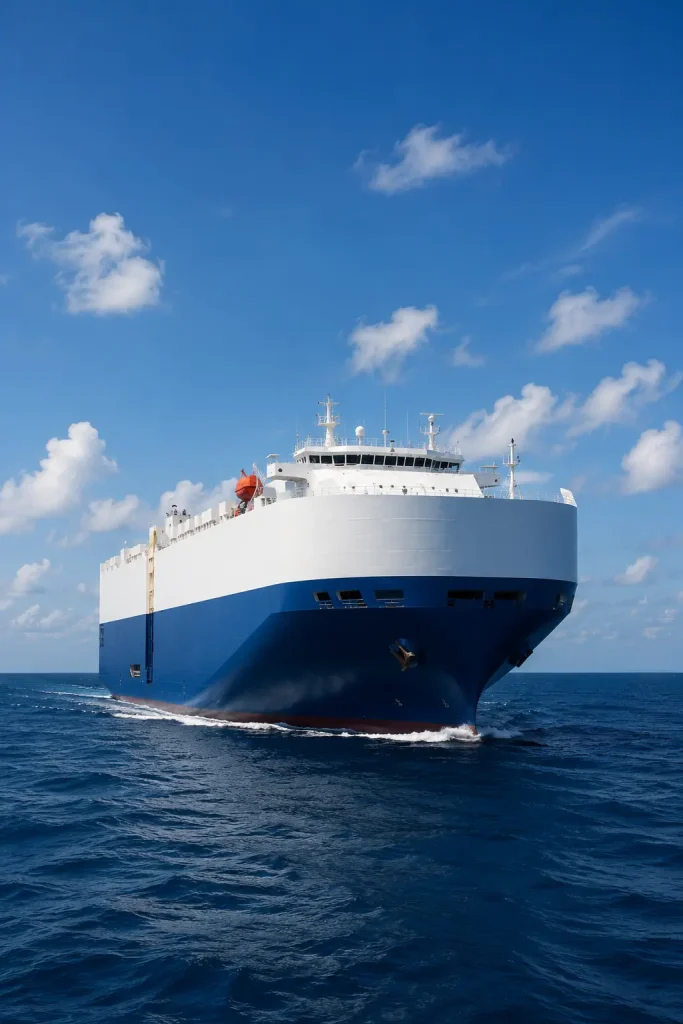
What is RoRo shipping?
RoRo stands for Roll-on/Roll-off. Your vehicle is driven or moved onto a specialised car-carrying vessel at the departure port, then driven off at the destination port.
In simple terms, the process usually looks like this:
- Vehicle prep and cleaning to meet shipping and biosecurity requirements
- Drop-off at depot or port for check-in and inspection
- Vehicle is driven onto the RoRo vessel and secured for the voyage
- Arrival and clearance, then collection or onward transport
For many individual car owners, RoRo shipping is popular because it is straightforward and purpose-built for vehicles. Transit times are commonly around 2 to 4 weeks, depending on sailing schedules, ports, and clearance time on arrival.
Benefits and drawbacks of RoRo shipping
Benefits
- Often lower cost: RoRo shipping can be more cost-effective because you’re not paying for a container or container loading/unloading steps.
- Designed for standard cars: The loading and unloading process is usually efficient because vehicles are handled as vehicles (drive-on, drive-off).
- Frequent sailings on common route: Australia to New Zealand is a well-travelled route for vehicle shipping.
Drawbacks and limitations
- Vehicles usually need to be running and rollable: Many RoRo shipments require the car to be drivable so it can be moved safely through the port and onto the vessel. Always confirm if your car is non-running.
- Personal items are usually not allowed: RoRo is generally treated as vehicle-only. Leaving personal belongings in the car can cause delays at inspection and clearance, especially with strict AU–NZ biosecurity rules.
- More exposure than a sealed container: Your car is moved through port yards and onto/off the vessel as part of the normal process, so it’s not sealed away from the environment.
May not be ideal for very low-clearance cars or special handling needs: If the car is extremely low, has body kits, or needs special handling, RoRo may not be the best fit.
What is container shipping?
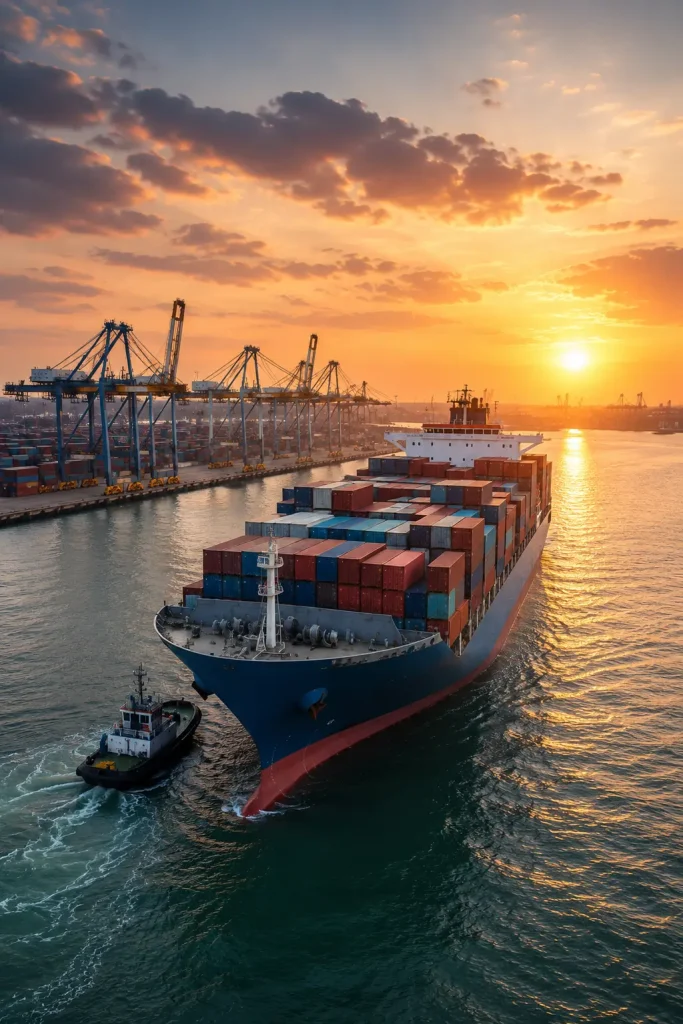
Container shipping means your car is loaded into a shipping container, often a 20-foot or 40-foot container, secured inside, and the container is sealed and shipped as containerised freight.
Container shipping is often set up as either:
- Sole-use container: your vehicle is the only vehicle in the container (more space, often more expensive).
- Shared or consolidated container: your vehicle shares container space with other cargo (can reduce cost, but timing can depend on consolidation schedules).
What the process usually looks like:
- Vehicle prep and cleaning, plus paperwork
- Delivery to the depot for loading
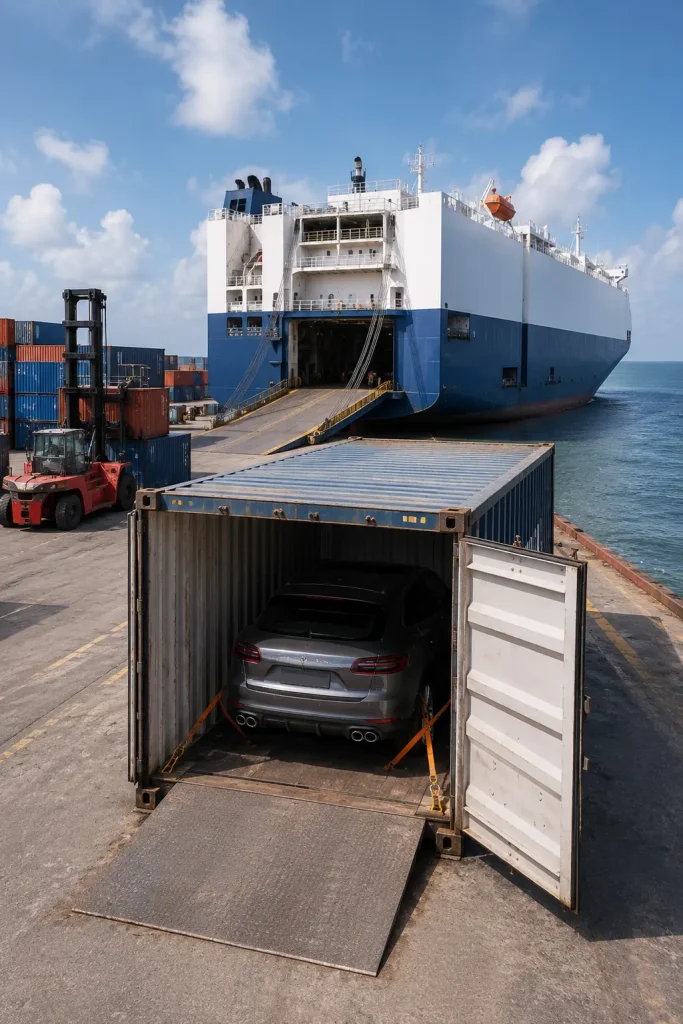
- Vehicle is loaded into the container, secured (tie-downs/bracing), then the container is sealed
- Container is discharged at destination, then unpacking and collection are arranged
Benefits and drawbacks of container shipping
Benefits
- More protection and security: Your vehicle is sealed inside a container for the sea freight portion, which reduces exposure to the port environment during transit. This can help reduce the risk of damage during transit, especially for higher-value vehicles.
- Can suit non-running vehicles: Container loading may be possible using equipment like a winch or forklift (depends on the depot, the car, and the booking conditions).
- May allow parts or spares: In some cases, you can ship parts with the vehicle, but it must be planned properly and declared. Rules vary and inspections can increase if extra items are included.
- Can be more flexible for some routes: Containers move on many shipping lanes, so container services may be available where RoRo options are limited.
Drawbacks and limitations
- Often higher cost than RoRo: You’re paying for container-related handling and the loading/unloading process. Sole-use containers typically cost more than shared options.
- More loading and unloading complexity: The vehicle needs to be secured correctly inside the container (tie-downs, bracing). Done properly, it’s safe, but it adds complexity.
- Potential extra charges at origin or destination: Handling, unpacking, storage, and inspections can add costs depending on the port and service provider. This is why quotes can vary a lot.
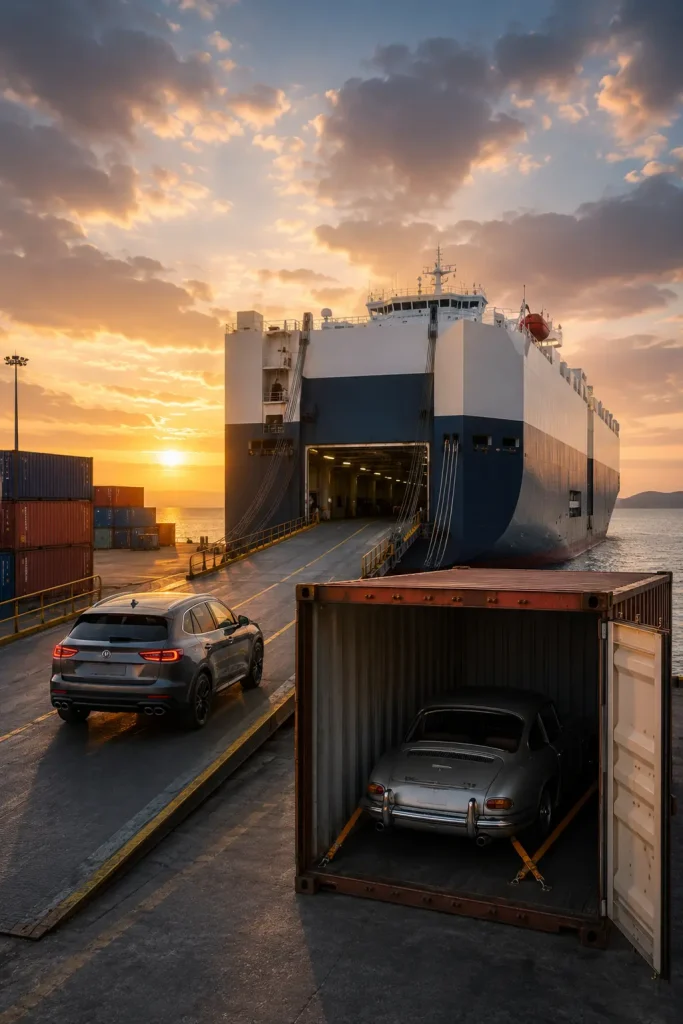
RoRo vs Container: the main differences
| RoRo Shipping | Container Shipping | |
|---|---|---|
| Cost | Often lower cost because there is no container and fewer loading steps. | Often higher cost due to loading, securing, and container handling. Shared container options can reduce the cost. |
| Protection | Vehicle is shipped as vehicle cargo and handled through port yards. | Vehicle is secured inside a container that is sealed for the sea freight portion. |
| Damage risk | More influenced by port handling and exposure. | More influenced by quality of loading, tie-downs, and unpacking. |
| Does the vehicle need to run? | Usually yes, though requirements vary by route, carrier, and port. | Not always. Non-running vehicles may be possible with the right setup. |
| Speed and scheduling | Often a straightforward option on common vehicle routes. Timing depends on sailings, ports, and clearance processes. | Can vary more depending on service type, such as sole-use versus shared or consolidated container service. |
| Best for | Standard, drivable cars; vehicle-only shipping; and a simpler process. | Higher-value cars; non-running cars; extra protection; sometimes parts/spares or personal effects with the vehicle |
Which should you choose: RoRo or container shipping?
If you’re shipping a car between Australia and New Zealand, here’s a simple way to decide which transport method fits best.
Choose RoRo shipping if:
- Your car is running and rollable
- You want a straightforward vehicle-only shipment
- You want to keep costs down
- Your vehicle is a standard car that suits normal handling
Choose container shipping if:
- You want extra protection and a sealed environment during the sea freight portion
- Your car is non-running and a depot/service can load it safely
- Your car is higher value, classic, or has mods/low clearance that make RoRo less suitable
- You may need to ship parts or spares with the vehicle (where permitted and correctly declared)
Want help choosing without the guesswork? Talk to the PeachT team. We will confirm what is actually allowed (items in the car, non-runners, etc.), flag any likely inspection issues, and recommend the best shipping option for your situation.
05
Get in Touch
Message us
Request a quote today.
- PeachT
- 1B/10 Cylinders Drive, Torquay VIC 3228, Australia
- +61 3 7037 0893
- info@peacht.com.au